
Collagen Booster vs Collagen - Qual è la differenza?
The Collagen Confusion: Booster or Supplement?
You've probably seen products labeled "Collagen Booster" alongside traditional "Collagen Supplements" and wondered: what's the difference? Is one better? Can you use both?
Let's break down the science behind these two approaches to supporting your body's collagen.
Direct Collagen: The Supplement Approach
What it is: Actual collagen protein, usually hydrolyzed (broken down into smaller peptides) from animal sources:
- Marine collagen: From fish skin/scales (Type I)
- Bovine collagen: From cow hides (Type I & III)
- Porcine collagen: From pig skin
- Chicken collagen: From cartilage (Type II)
How it works:
- You ingest collagen peptides
- Your digestive system breaks them into amino acids
- Your body absorbs these amino acids
- Your cells may use them to produce new collagen
- Some peptides may signal your body to increase collagen production
The science:
- ✅ Studies show 2.5-10g daily can improve skin hydration/elasticity
- ✅ Marine collagen has smaller peptides (potentially better absorption)
- ⚠️ Your body doesn't directly insert ingested collagen into your skin
- ⚠️ Results take 8-12+ weeks of consistent use
Best for: Direct supplementation of collagen building blocks
Collagen Booster: The Support Approach
What it is: Nutrients that support your body's own collagen production:
Key Collagen-Supporting Nutrients:
- Vitamina C (essenziale)
- WHY: Absolute requirement for collagen synthesis
- HOW: Acts as co-factor for enzymes that build collagen molecules
- DOSAGE: 60-90mg daily (higher for collagen support)
- SOURCES: Citrus, berries, acerola, supplements
- Copper
- WHY: Required for cross-linking collagen fibers (structural integrity)
- HOW: Component of enzyme lysyl oxidase (strengthens collagen)
- DOSAGE: 0.9-2mg daily
- SOURCES: Nuts, seeds, shellfish, supplements
- Zinc
- WHY: Activates proteins necessary for collagen production
- HOW: Cofactor in collagen synthesis enzymes
- DOSAGE: 8-11mg daily
- SOURCES: Meat, legumes, nuts, supplements
- Amino Acids
- WHY: Building blocks of all proteins including collagen
- KEY ONES: Glycine, proline, hydroxyproline
- SOURCES: Protein-rich foods, bone broth, supplements
- Silica
- WHY: May help activate enzymes for collagen production
- EVIDENCE: Limited but promising
- SOURCES: Whole grains, green beans, bamboo extract
- Antiossidanti
- WHY: Protect existing collagen from oxidative damage
- KEY ONES: Vitamin E, polyphenols, resveratrol
- SOURCES: Fruits, vegetables, green tea
How it works:
- You consume collagen-supporting nutrients
- Your body uses these as tools/co-factors
- Your cells produce collagen more efficiently
- Existing collagen is protected from damage
Best for: Supporting your body's natural collagen production process
The Science: Which Approach Is Better?
Research suggests: BOTH approaches have merit, and COMBINATION may be ideal.
Direct Collagen Supplements:
- ✅ Provide specific amino acids in optimal ratios
- ✅ May signal body to increase collagen production
- ✅ Convenient, standardized dosing
- ❌ Expensive if quality source
- ❌ Not vegan/vegetarian
- ❌ Doesn't work if co-factors (vitamin C, etc.) are deficient
Collagen Boosters:
- ✅ Support your body's natural production
- ✅ Can be plant-based/vegan
- ✅ Benefits extend beyond just collagen
- ✅ Often less expensive
- ❌ Requires consistent whole-food approach or multiple supplements
- ❌ Less direct pathway than consuming collagen itself
- ❌ May not provide enough amino acids if protein intake is low
The Synergy: Why Combination Works Best
Research increasingly shows that collagen + co-factors is more effective than either alone:
Example from research: A study published in Nutrients found that 2.5g collagen + 60mg vitamin C + zinc + biotin produced significantly better skin improvements than collagen alone.
Why?
- Collagen provides: Specific amino acids, potential signaling molecules
- Co-factors provide: Tools your body needs to actually build with those amino acids
- Together: Optimal environment for collagen synthesis
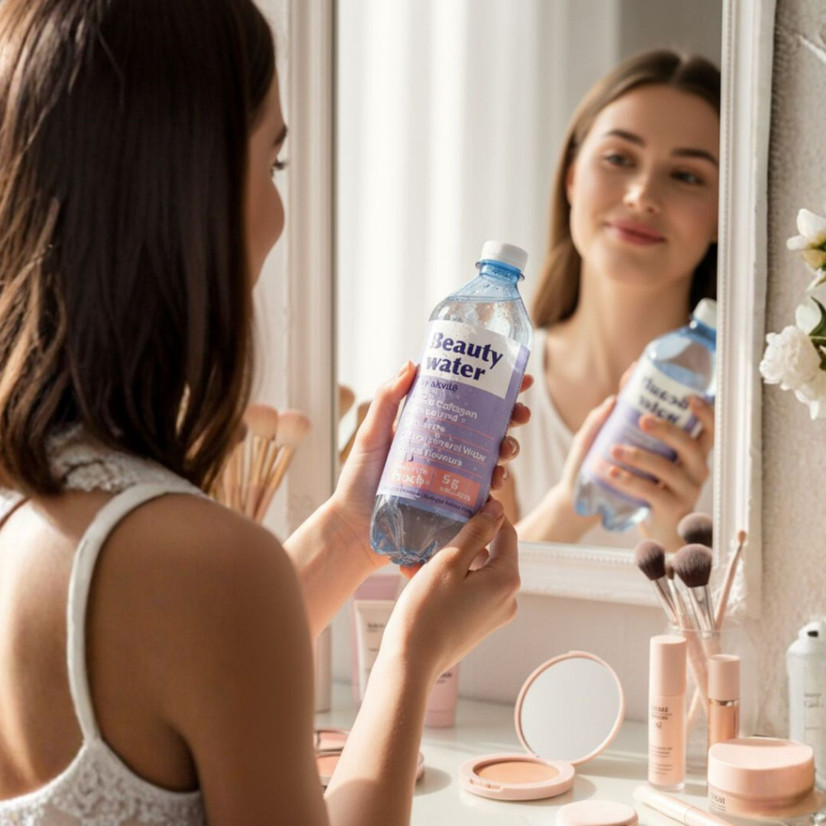
Real-world example: Akvile Beauty Water combines:
- 5g marine collagen (direct supplementation)
- Vitamin C from natural sources (co-factor)
- Natural hyaluronic acid (skin hydration support)
= Combination approach based on research showing synergy
Can You Be Vegan and Support Collagen?
The challenge: There's no such thing as "vegan collagen"—collagen is an animal protein.
However: You can support collagen production without consuming collagen:
Vegan Collagen-Support Approach:
- Ensure adequate protein intake (providing amino acids)
- Supplement vitamin C (essential co-factor)
- Include zinc and copper (through diet or supplements)
- Consume silica-rich foods (oats, brown rice, bananas)
- Eat antioxidant-rich plants (protect existing collagen)
- Consider specific amino acid supplements (glycine, proline)
Emerging: "Vegan Collagen" Some brands now offer "collagen-building" supplements with:
- Amino acids that mimic collagen's profile
- High amounts of vitamin C, zinc, copper
- Biotin and silica
- Plant-based hyaluronic acid
The truth: It's not collagen, but it provides tools for your body to make it.
Who Needs What?
Consider DIRECT COLLAGEN if:
- You want most direct approach
- You eat animal products
- You're willing to invest in quality supplements
- You have specific skin/joint goals
- You want convenience of one product
Consider COLLAGEN BOOSTER if:
- You're vegan/vegetarian
- You already eat protein-rich diet
- You prefer supporting natural processes
- You're budget-conscious
- You're focusing on overall wellness
Consider BOTH if:
- You're serious about collagen support
- You can afford quality products
- You want maximum benefits
- You're addressing specific concerns (aging skin, joint health)
The Bottom Line
What science shows:
- Direct collagen works (with proper dosing)
- Collagen co-factors are essential (without them, collagen supplementation is less effective)
- Combination approach appears most effective
- Vegan collagen support is possible but requires comprehensive approach
The honest truth: You don't need either if you:
- Eat balanced diet with adequate protein
- Consume vitamin C-rich foods daily
- Get minerals from diverse diet
- Protect skin from sun damage
- Don't smoke
- Stay hydrated
But for targeted support, visible anti-aging goals, or convenience, properly formulated collagen products (supplement or booster) can help.
The NoBullshitDrinks philosophy: We believe in combination approach when formulating products:
- Adequate collagen dose (not token amounts)
- Essential co-factors included
- Transparent about what each ingredient does
- Honest about realistic expectations
Want a collagen drink with synergistic co-factors?
[Explore Akvile Beauty Water →] [Explore JOA collagen booster →]
Articoli recenti
-

Cosa sono le bevande funzionali? La guida completa alle bevande che fanno di più
Introduzione: L'ascesa delle bevande funzionali L'industria delle bevande sta vivendo un cambiamento fondamentale
-

Bevande per la salute dell'intestino: Probiotici, prebiotici e la scienza del benessere digestivo
Introduction: Your Gut is Your Second Brain The digestive system is far more than a food-processing
